
As one of the original eight Wild and Scenic Rivers designated in 1968, the Rogue River has a storied reputation as one of the most spectacular waterways in all of the United States. Along the 40-mile Rogue River National Recreation Trail, its glistening green waters run unimpeded through the Klamath Mountains, a range known for its varied geology and unparalleled diversity of plant life. Three days, four snakes, five piles of bear scat, and seven hundred thousand ticks later, I’m convinced this is the one backpacking trip in Southern Oregon that you can’t miss.
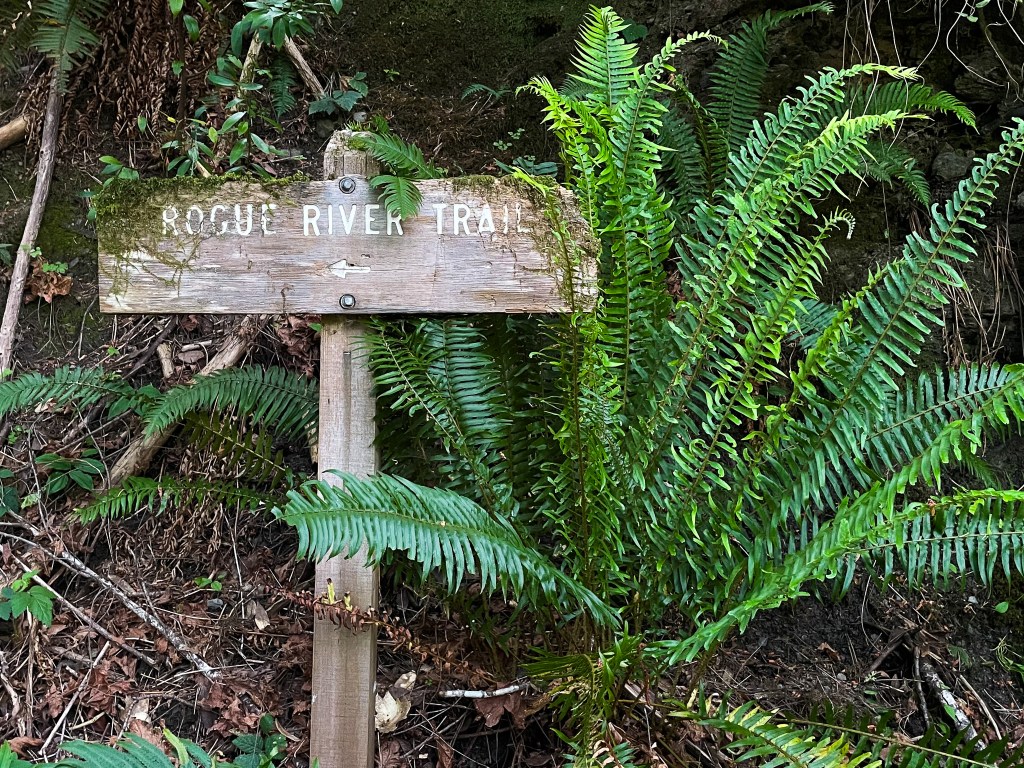
Day 1: Grave Creek to Kelsey Creek
After coordinating my shuttle and bidding farewell to my vehicle at the Grave Creek lot, I set off on the sun-scorched trail. Golden grasses burst out from colorful volcanic rock and Oregon White Oaks clings for dear life on steep cliff sides. The Lower Rogue River wildflower extravaganza tends to be held in April, and so I am several weeks fashionably late, but Oregon sunshine, blue dicks, farewell to spring, harvest Brodiaea and paintbrush held on just long enough for some colorful companionship on open slopes.
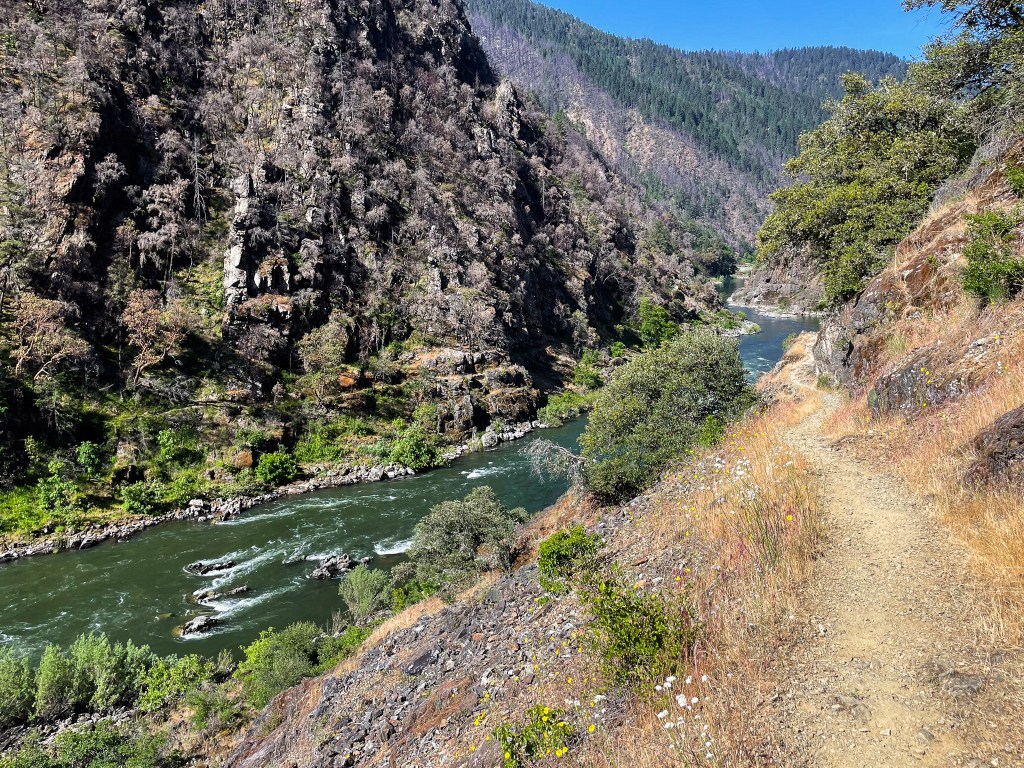
The beginning stretch–quite exposed–offers excellent views of the Rogue River. Rainie Falls, a set of sparkling white rapids, is one of the many features along the river that make the Rogue a worldwide whitewater rafting destination.

There’s a surprising amount of variety on the Rogue River Trail, especially considering that the trail does nothing but follow the northern bank of a river for 40-odd miles. Sometimes you’re stepping over reptiles on sunny, rocky slopes. The next moment you’re shaded underneath a cool canopy of oaks, madrones and douglas-fir.

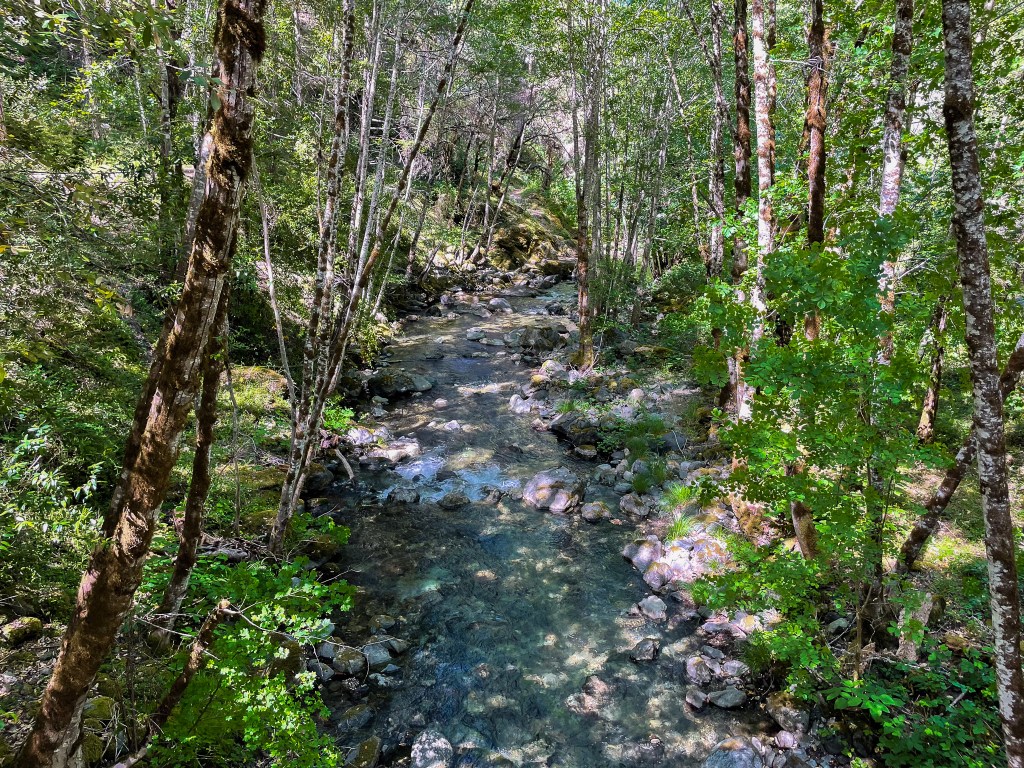
Like a backpacker’s dream, year-round creeks bisect the trail every two miles. Alders and cottonwoods provide shade and wind-protection around these creeks for campers.
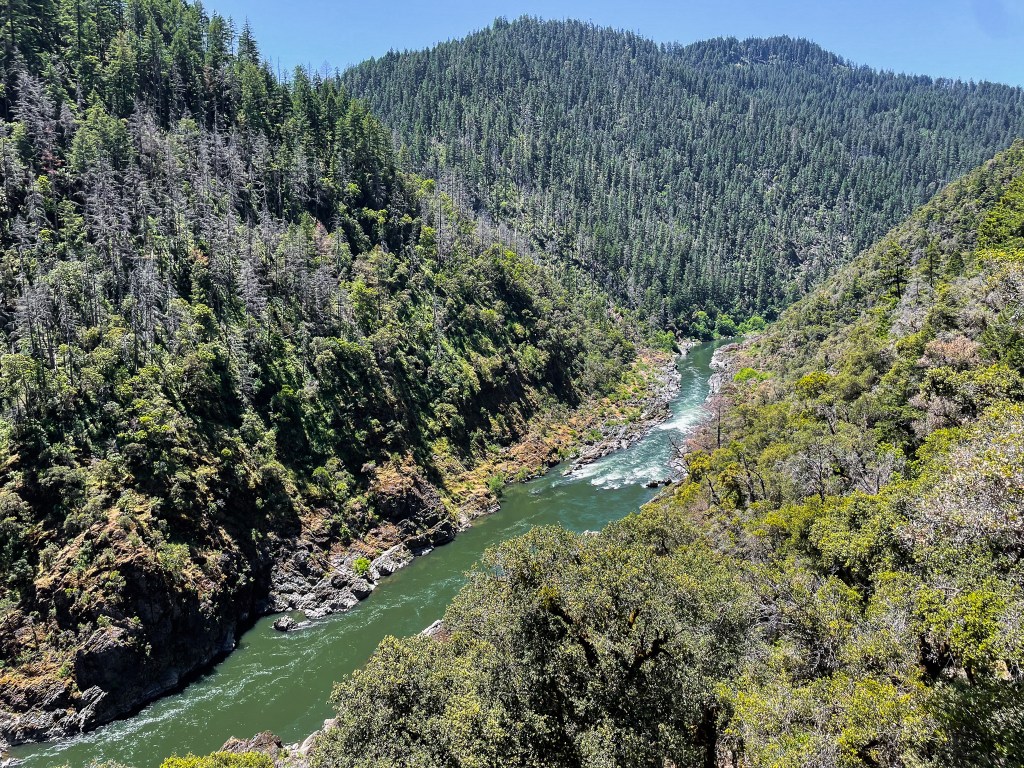
After Bronco Creek, the trail climbs several hundred feet up the mountain to avoid an inhospitable cliff face. Aerial views of the Rogue River are spectacular along this stretch.
Eventually making its way back down to the river along a horseshoe bend, the trail enters a lush glade with a number of creeks crossing the trail and a surprisingly limited selection of campsites.

Tall sword ferns dominate the understory, and moisture-loving wildflowers like red columbine and Del Norte Iris take refuge here.

I met many of the cool, wet forest’s inhabitants such as the pacific sideband and iconic banana slug. Contrast this with the sunny neighborhood a half mile back, which sun-loving gopher snakes and lizards call home.

After 12 miles, I still had a little gas left in the tank and sun in the sky, so I pushed on towards Kelsey Creek. I’d read about two large, luxurious campgrounds overlooking a beautiful ravine at Kelsey, and kept it pushing in the afternoon heat. I felt like Moses leading my wobbly legs to the promised land of milk and honey.

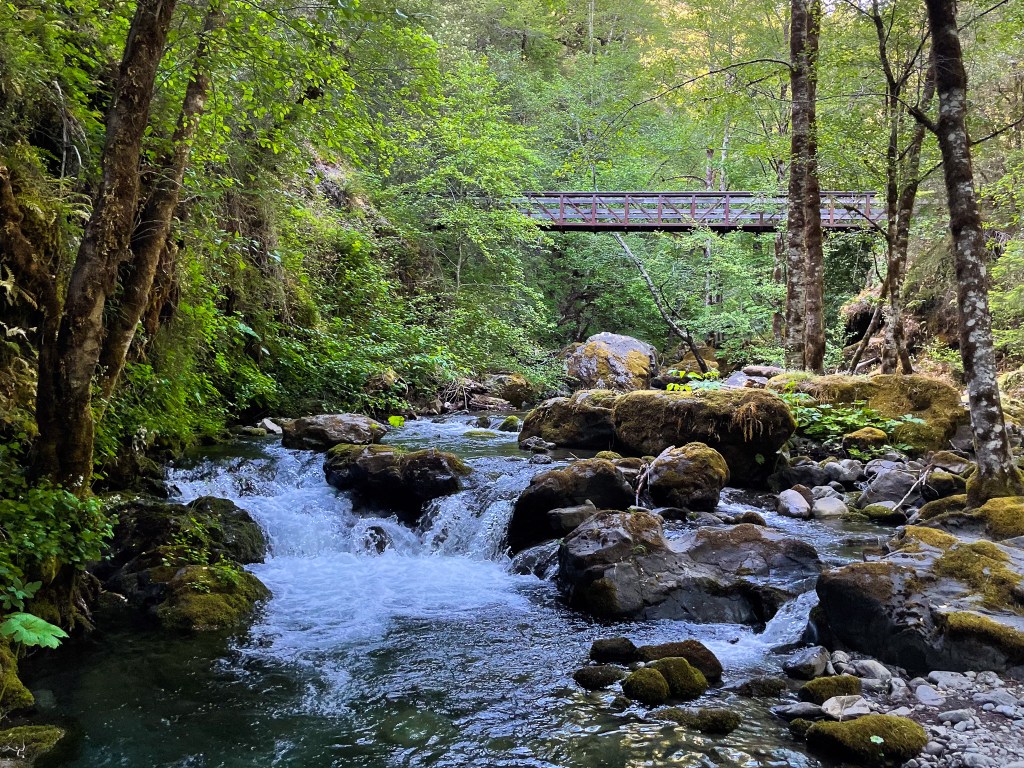
And there it was – Kelsey Creek. A massive campsite unoccupied in the late afternoon sprawled out directly below the trail, perched above the creek. There must have been room for another 5-6 tents – foreshadowing. A 25 foot walk down from camp led to a mossy lush gorge of fairytale-like beauty. It was glorious.
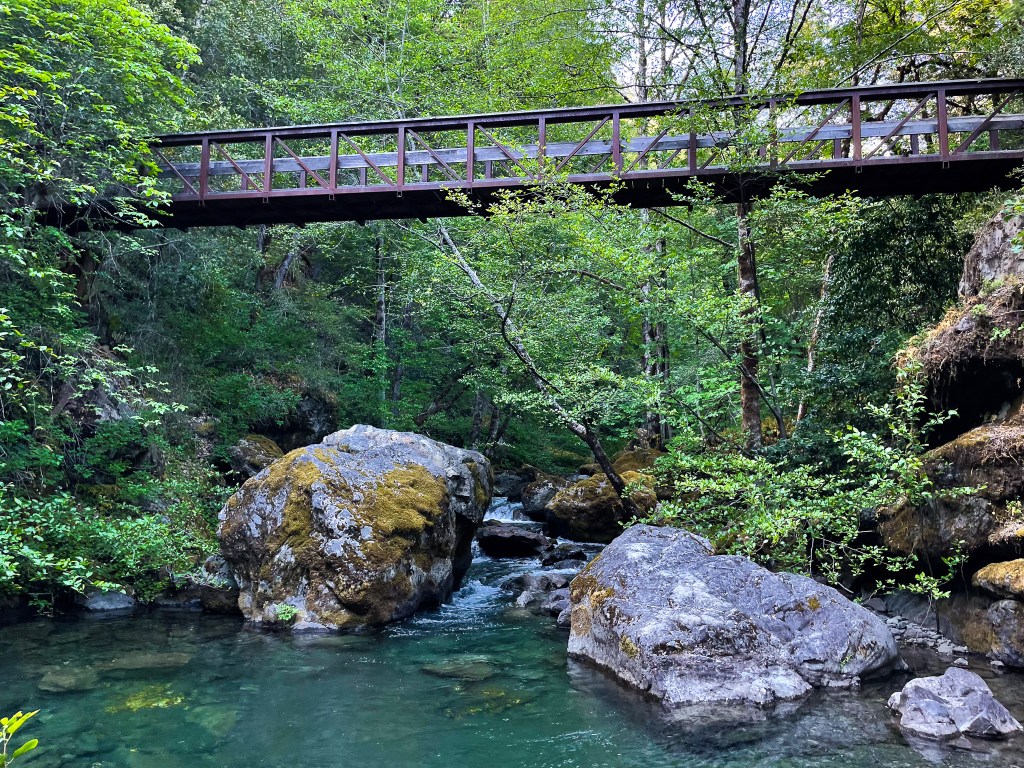
No more than 5 minutes after setting up, a group of six came down the bend and asked to share my campsite. Of course, I couldn’t keep it all to myself, but I’d be lying if I said I wasn’t a little bummed.
Day 2: Kelsey Creek to Tate Creek
Rise and shine! The Rogue looks brilliant in the morning light. It is amazing to think that this river, wide and deep, started as a trickle near the top of Crater Lake’s rim. The Rogue River is 215 miles long, and by the time it meets the sea, it has drained about 3.3 million acres (roughly the size of Connecticut)of land.

With a long day ahead of me, I quickly shuffle down the trail. Ditch Creek, the next creek down, meets the Rogue River in a languid state. A grassy meadow extends down from the trail to the water–a scene so beautiful it feels master-planned.

Then, more travel through oak savanna. It’s a unique landscape to hike through relative to the rest of Oregon, especially when you associate hiking in the PNW’s coastal ranges with towering old-growth cedars and firs.
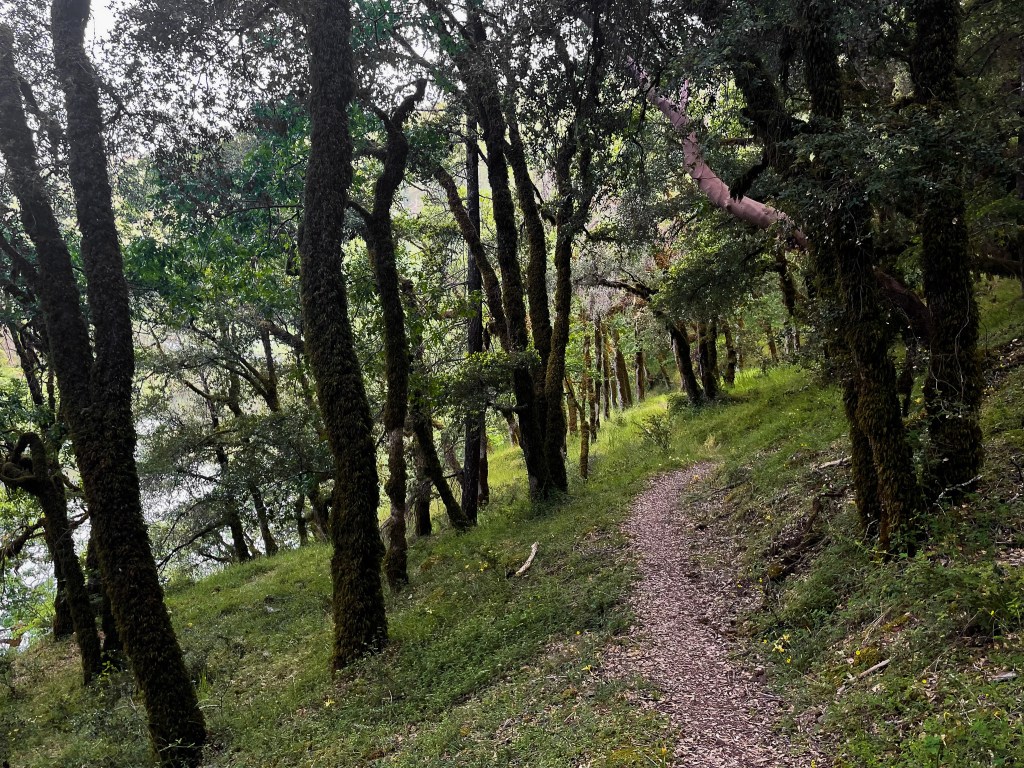
On queue, another abrupt change into a lush, dark forest. Only, these lush detours are becoming more frequent the closer we hike to the coast. The interior Rogue Valley is no stranger to 100 degree temperatures in the summertime, being much too far from oceanic influence. Tongues of fog and bursts of ocean breeze gain more influence on the landscape with each mile hiked westward, and the plant life reflects that.

After so many miles, I reached the part of the hike I was looking forward to most: Marial. Certainly not because of the scenery, but because of the availability of a toilet. I am not a big fan of doing my business in the wilderness, and will plan around it when possible. The Lower Rogue River Trail is essentially divided in half by the community of Marial, which is at this point a campground, an unoccupied ranch and various pieces of USFS infrastructure. The single-track widens into a dirt road, and the perception of wilderness vanishes before your eyes.

The evidence of human life is everywhere: parking lots full of cars, the sprawling Rogue River Ranch with accompanying signage, and people with JBL speakers flubbing around. This is the first backpacking trip I’ve ever taken that has felt like it has an intermission: The show has been paused, I can go to the bathroom and we will resume in about 30 minutes. I focus on following signage bolted into the tree guiding me through the tangle of dirt roads.
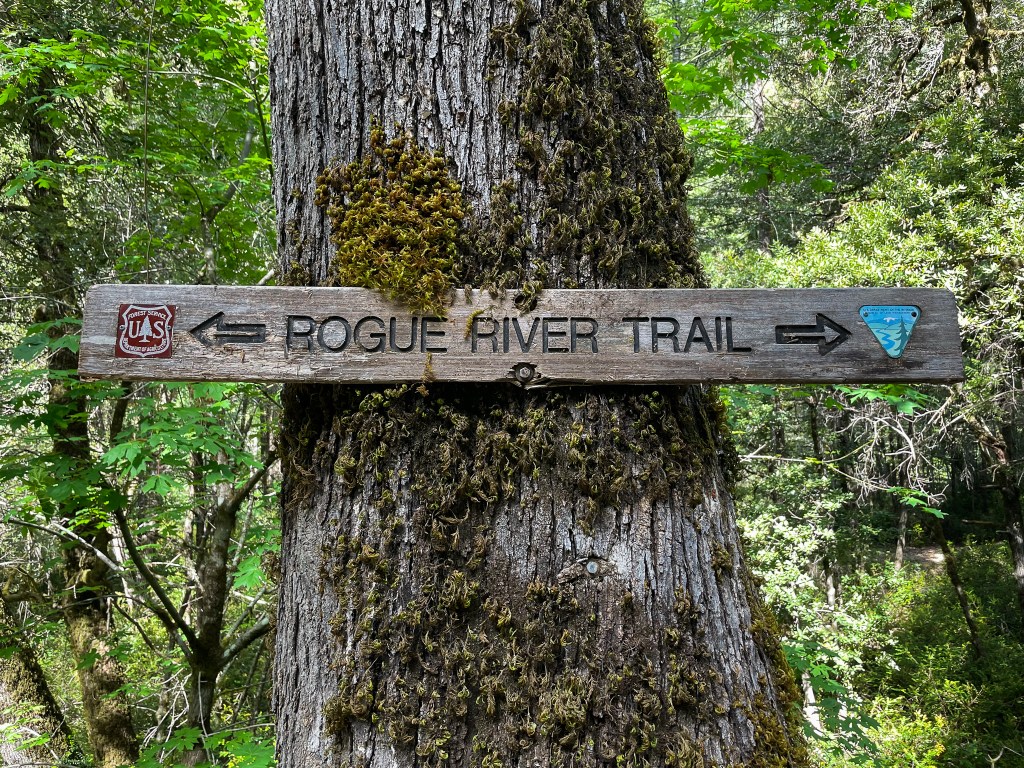
After two miles, I find myself at the Marial Trailhead, which can be accessed by car provided that you are brave and have either high clearance or a rust bucket you don’t care about. There’s an outhouse here which appears to be serviced about once every 100 years, which is still better than digging a cat hole. Within minutes, I am back onto the trail and immediately into the Wild Rogue Wilderness, a federal designated wilderness area protecting easily the most scenic stretch of the river.
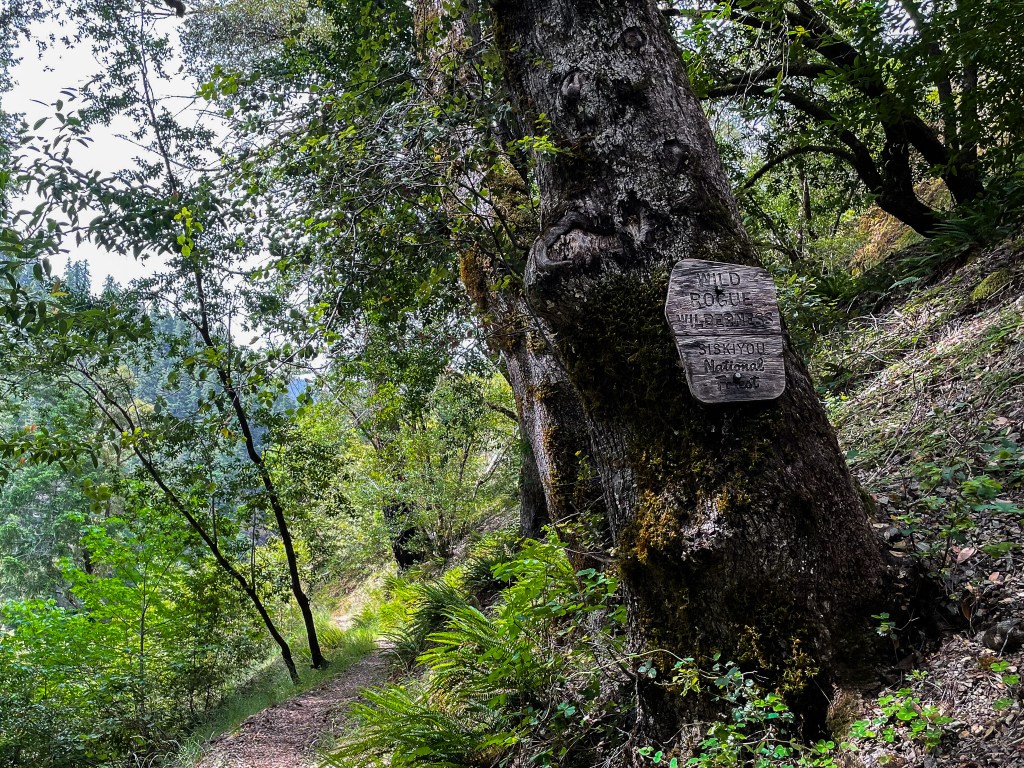
The trail emerges from forest to a sunny cliff high above Mule Creek Canyon, where bedrock walls close into a deep, narrow channel. The basalt and sandstone cliffs on the south bank meet here to frame a wildly unpredictable section of river.

The Coffee Pot, despite not appearing that much different from the rest of this canyon, is possibly the most famous rafting obstacle in the entire waterway. The narrowing walls create hectic currents and diagonal waves, hurling rafters into a whirlpool.
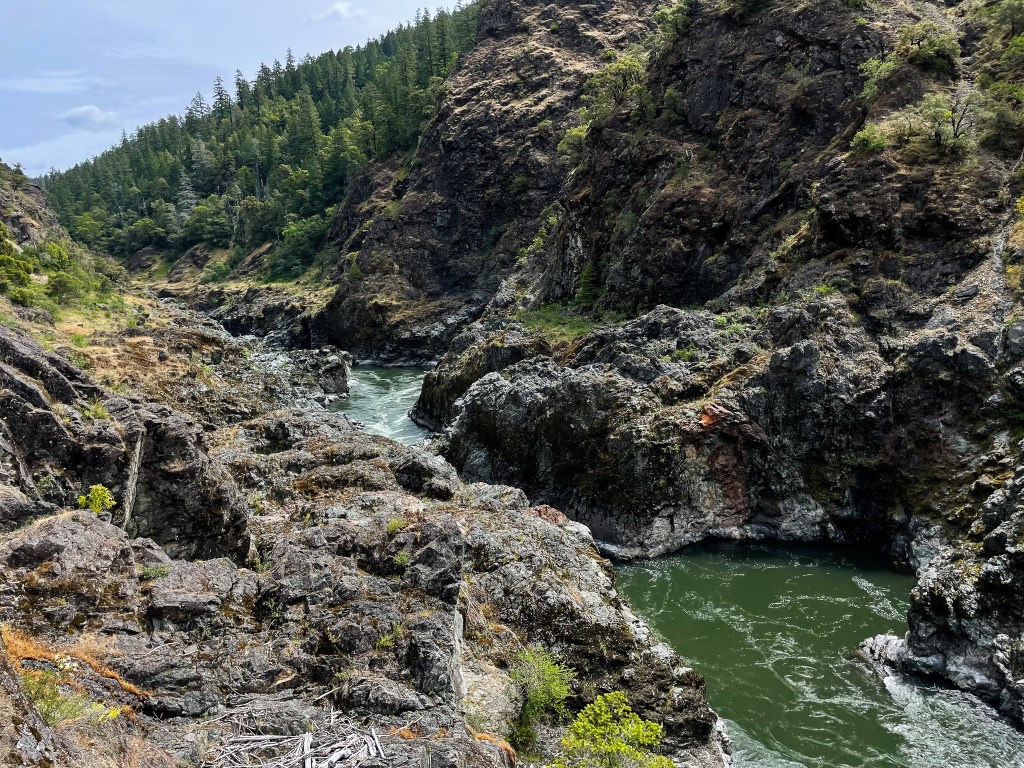
Rafters are mostly a non-factor to hikers, except when sharing some of the more accessible campsites. They may be less likely to respect the unwritten rules of the wilderness, and have a greater ability to transport fresh food and grills, which produce tantalizing smells while you eat your sad, pathetic granola bar in your tent. While rafters can be an irritant, I couldn’t help but commend their bravery along this section.
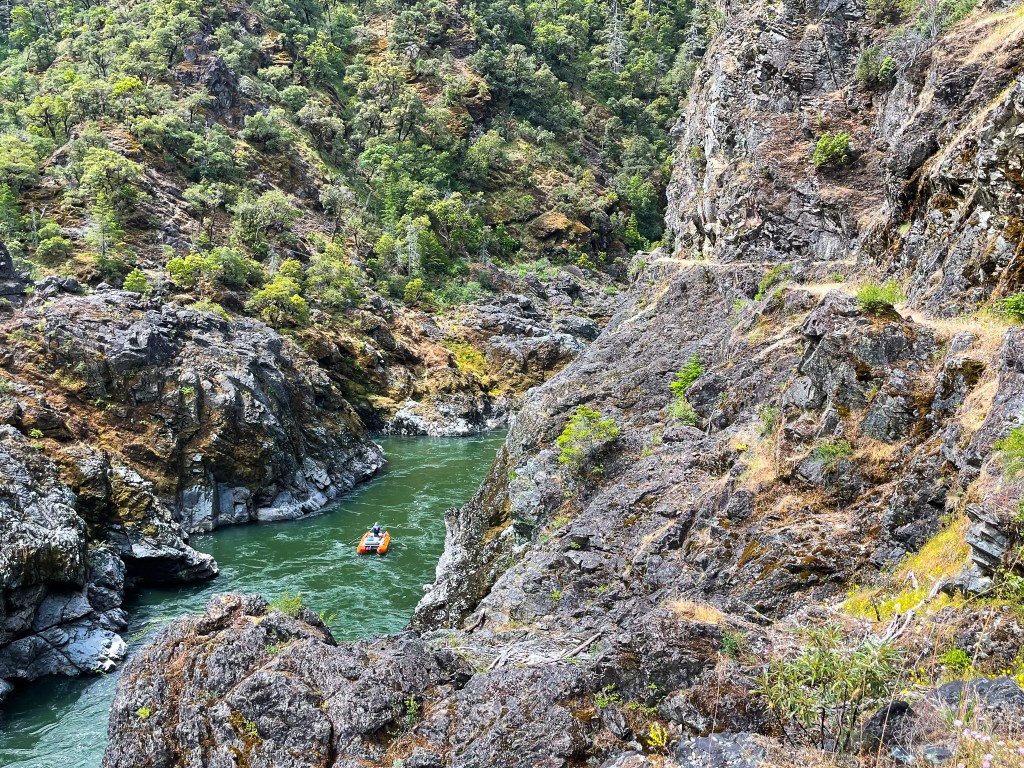
Stair Creek pours down from the southern slopes of Mule Creek Canyon, culminating in a series of cascades. Best viewed from Inspiration Point, this was the scenic highlight of the entire hike. I could have stayed here all day, admiring Stair Creek Falls tumbling into the narrow canyon.

After so long, a rickety bridge over Blossom Creek marks the end of Mule Creek Canyon. Add this to the growing list of gorgeous side creeks along the Rogue River Trail.
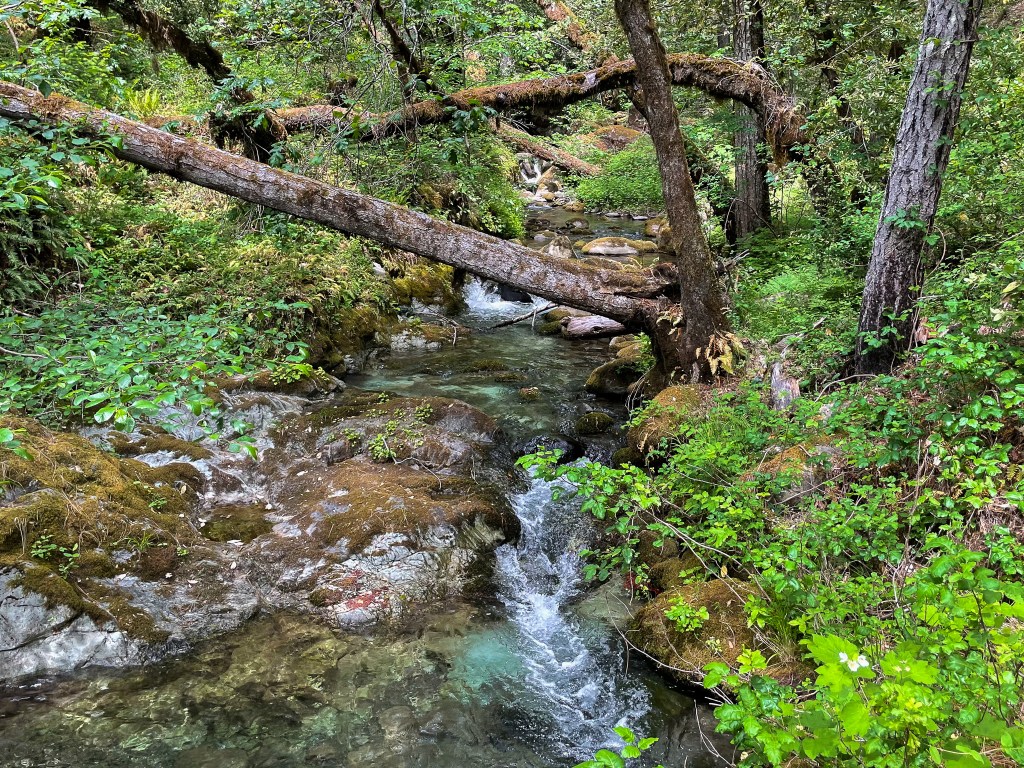
Just a few blocks down is Paradise Lodge. Paradise Lodge is one of the many lodges on both sides of the river where rafters can stay… for big coin. As I approach the property, I first notice a few adirondack chairs around a fire pit. Then, a sweeping manicured lawn with frisbee golf strewn about. Then, people wearing comfy clean clothes cracking some beers. The “civilization” of it all is jarring when the biggest luxury you’ve afforded yourself on this trip was a fresh banana.
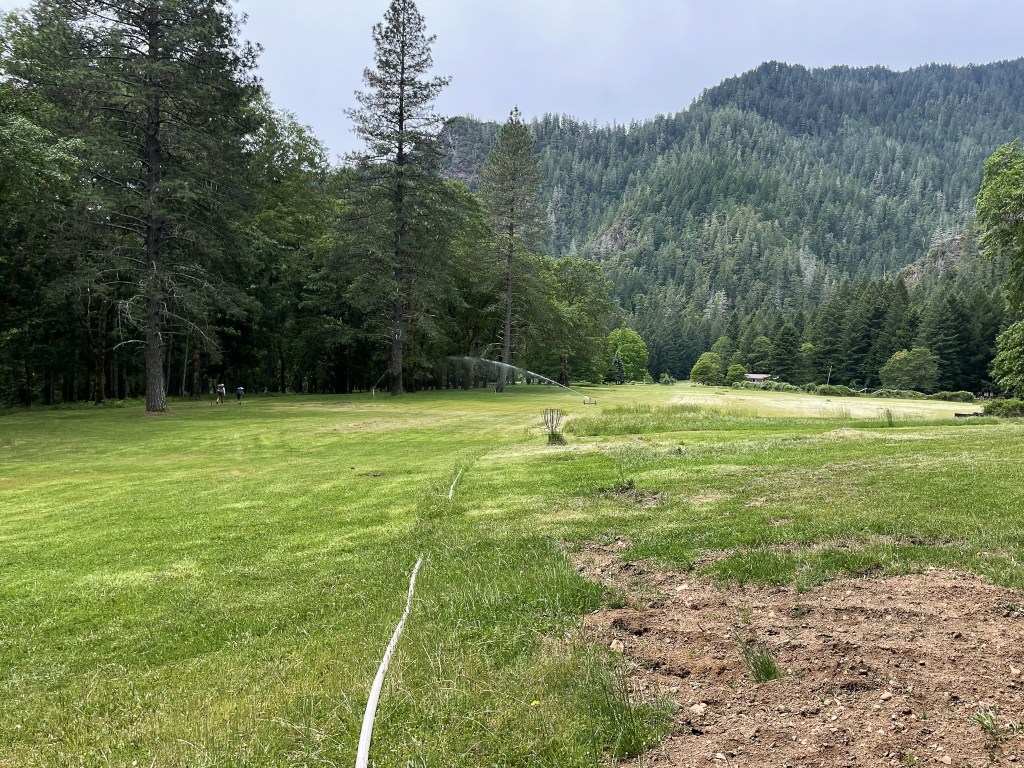
After the lodge, the hiker is given a choice to either continue on a 2-mile segment of the Rogue River Trail that hugs the river along a C-bend, or shortcut over the mountain on the 1-mile Devil’s Backbone Trail. The former is well-maintained and predictable, whereas the latter is brushy and steep. I’ve had enough ticks and close calls with snakes to last a lifetime, so I continue along the river.

The Rogue River Trail and Devil’s Backbone convene in Brushy Bar. There’s a guard station here that is partially open to the public, containing hand-carved benches and an outhouse. I wasn’t sure if one could stay here, so I didn’t, despite the amenities.
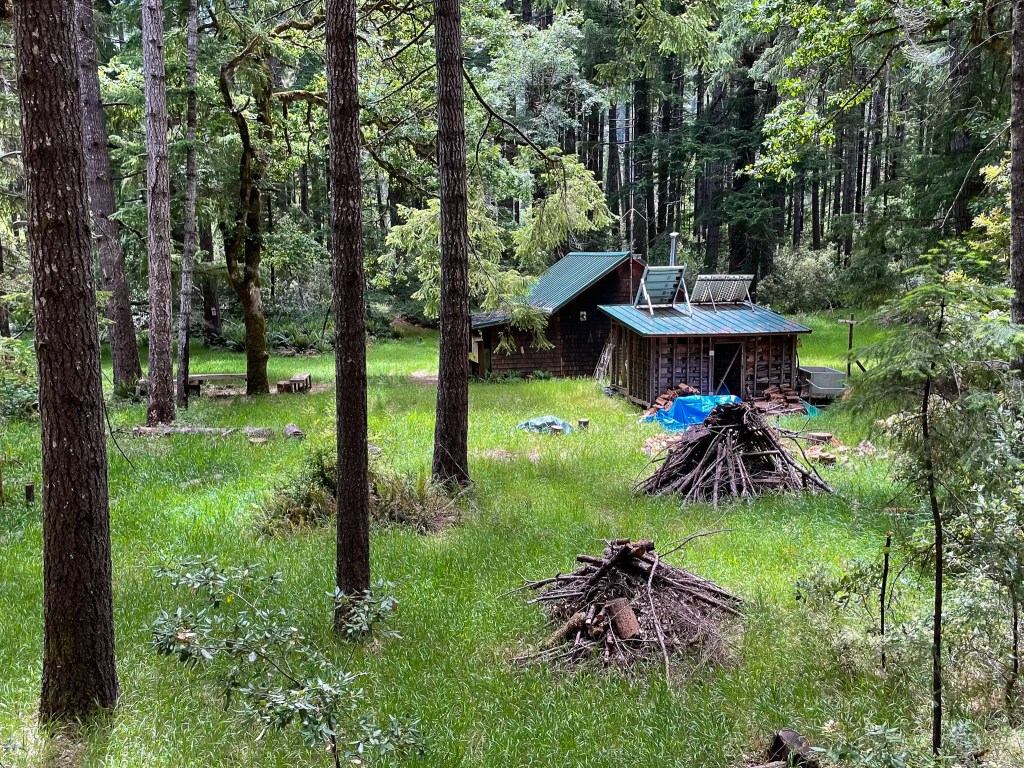
I’m not sure how Brushy Bar gets its name, because from my perspective, all I can see is lush forest around. Douglas-fir, tanoak and a healthy understory of ferns make this the closest I’ve felt to a coastal rainforest since before the hike began. It’d be a great place to camp if mosquitoes hadn’t claimed all of the sites, so I keep it trucking in search of an open campsite.

After nearly 18 miles on the trail, it was time to settle down. After fifteen minutes of browsing Tate Creek, I found a site that had both oak-provided shade and views of the Rogue. Just like yesterday, I am approached by a rafter who had recently docked at Camp Tacoma down below. “Nice campsite,” he says. “Thanks!”, I reply. “Wow, and the shade? This is great.” I’m starting to get the picture, since he’s sticking around for a while and cannot stop mentioning my campsite. Sorry buddy, there’s plenty of other sites, I’m not offering to share this one.

Day 3: Tate Creek to Foster Bar
Day three is when longing for societal comforts typically starts to set in. After eating nothing but cardboard for the past 48 hours (yes, I understand that this is my choice), I’m dreaming of the hot shower and hot food that awaits me in Crescent City. I strike off early for my early morning ritual, the Admiration of the Rogue River.

Passing by the decrepit Clay Hill Lodge, I stumble onto one of the scenic highlights along the entire trail. Flora Dell Falls careens off of a mossy ledge into a beautiful turquoise pool.
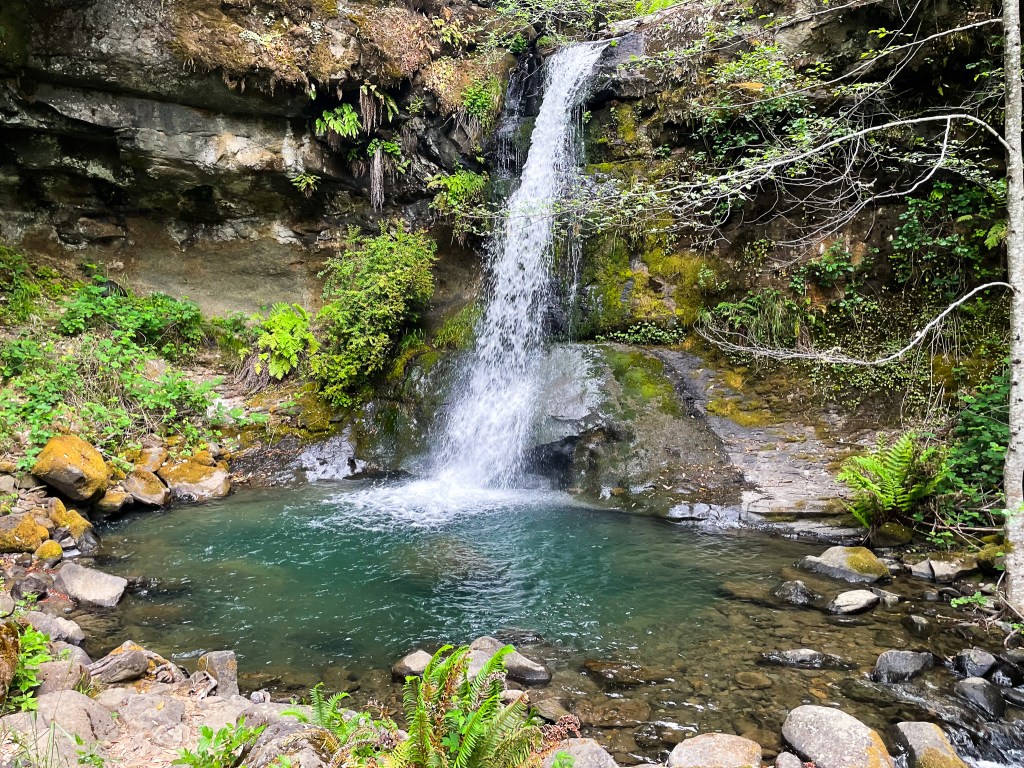
From this point onward, the influence of the ocean and the coastal weather patterns are clear. The trail cuts through a second-growth forest comprising Douglas-fir, Port Orford Cedar and Tanoak.

After Dans Creek, the trail leaves the Wild Rogue Wilderness and travels through a patchwork of scrub and open prairie. Daydreams of a comfortable hotel room and nightmares of my car not being in the parking lot converge as I approach Foster Bar. And finally, I’m there. Despite the spectacular scenery, I cannot wait for a warm meal.

 Backcountry Bassett