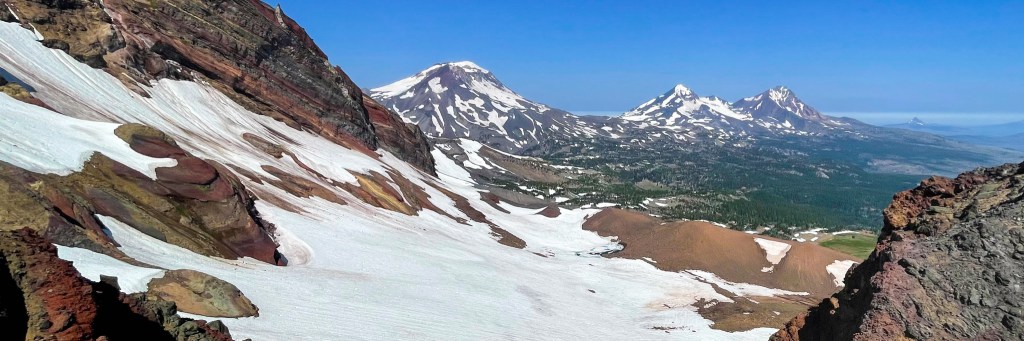
Nowhere else in Oregon’s Cascades can one find such a high concentration of highlights in one area. Broken Top, Mount Bachelor, the Three Sisters headline this star-studded cast on this trip to Broken Top Crater, but glacier-clad peaks are just part of the appeal of this trip. Expansive wildflower-laden meadows, gorgeous subalpine woodlands parted by icy streams, and a five-star highlight in iridescent No Name Lake make this one of the most loaded lineups among any day hike in the Cascades. This is Oregon at its best.

The journey begins on a well-marked turnoff for Todd Lake along Mount Bachelor highway. The “road” to Todd Lake is god-awful — its deeply rutted surface had my sturdy Subaru bouncing like a SoCal lowrider. With my destination only one-half mile down the Todd Lake Road, my journey wasn’t long enough to raise concern, but tough enough to warrant colorful language and gritted teeth. By the time I arrived, it was already 7AM, and there were a surprising amount of cars in the lot for a Tuesday. With high heat in the forecast, I quickly grabbed my gear, hastily applied some sunscreen and Picardin, and marched along the dirt road towards the Todd Lake Campground.
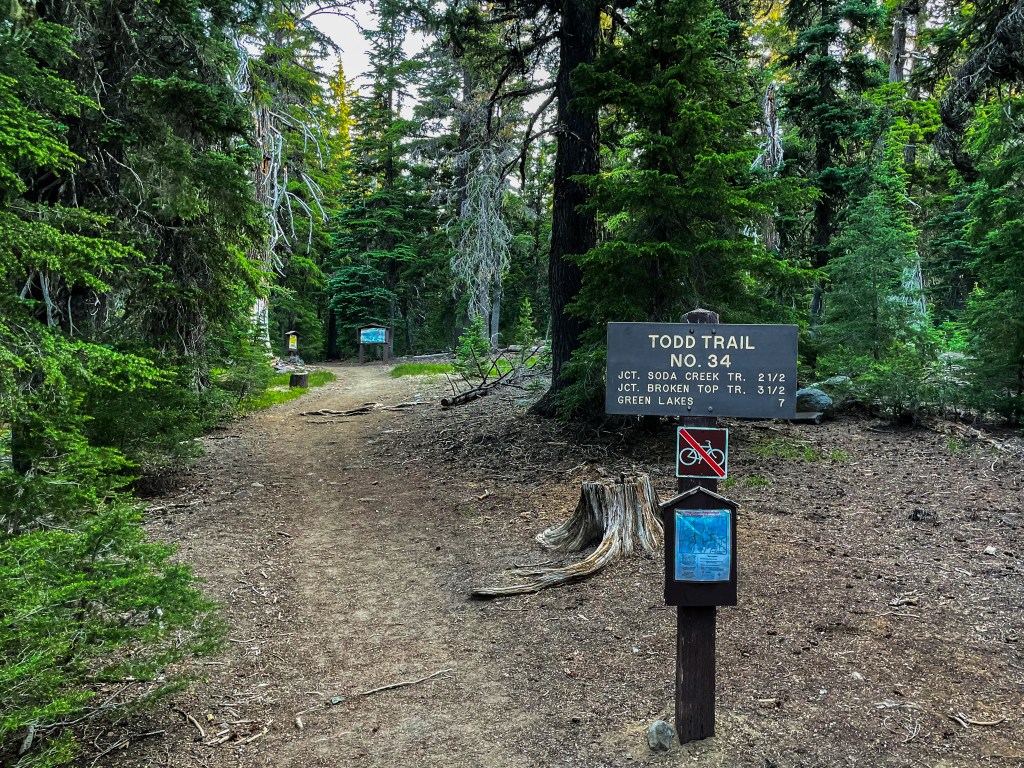
Banking a right at the fork just short of the camp, I turned onto the Todd Trail, noticeably darker and lusher than the environs by the parking and campground. The forest is pleasant and enclosed, primarily composed of mountain hemlock and subalpine fir. The Todd Creek Neighborhood Association of Mosquitoes seem to agree that this is a fine location, and don’t take too kindly to visitors on their property. My liberal use of Picardin was no match for their numbers and tenacity, and even with my brisk pace I ended up with more than twenty bites.

The Todd Trail remains in the forest for roughly three miles, and is interrupted often enough by small meadows and passing creeks to add interest. Named the Todd Trail as a nod to the nearby Todd Lake and Todd Creek (which in itself is named after John Y. Todd, an early white settler), it is odd that neither are seen throughout the course of the trail, but the trail grade is low enough and the walk pretty enough to excuse the absence of highlights. Towards the junction with the Broken Top Trail, the forest canopy opens up for good.

At the junction, the Broken Top Trail takes an easterly course through sparse woodland, allowing for awesome views. To the north, the Broken Top massif and its rusty cirque house a surprisingly large south-facing glacier.

To the south, a grand view of thehome of Southern Oregon’s finest ski destination, Mount Bachelor. The perfectly cone-shaped mountain gets its name because it stands alone from the close-knit Three Sisters just two air-miles north. Its north face holds a considerable amount of snow for late July of an average snow year, so it’s not hard to see how Mount Bachelor reliably stays open to ski bums through Memorial Day.
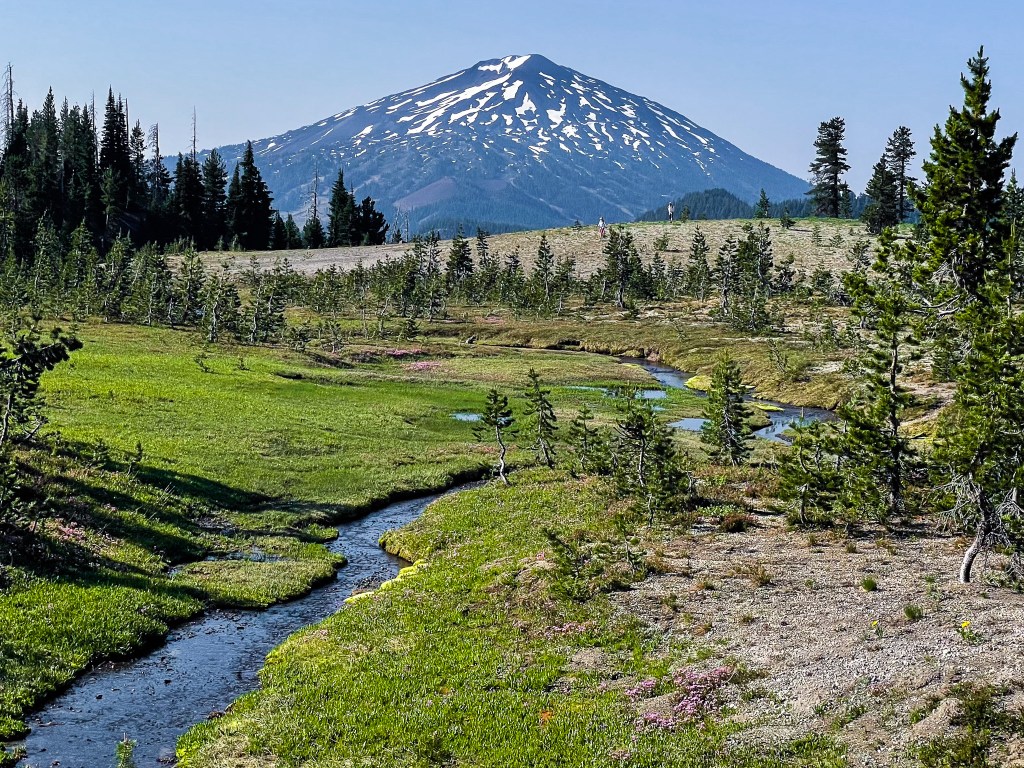
Past the Crater Ditch junction, the trail climbs steeply north through open stands of Subalpine Fir and ghostly Whitebark Pine. In the early part of the summer, this section of trail is magical. Wildflowers proliferate the open south-facing slopes and snowmelt streams barrel downslope.
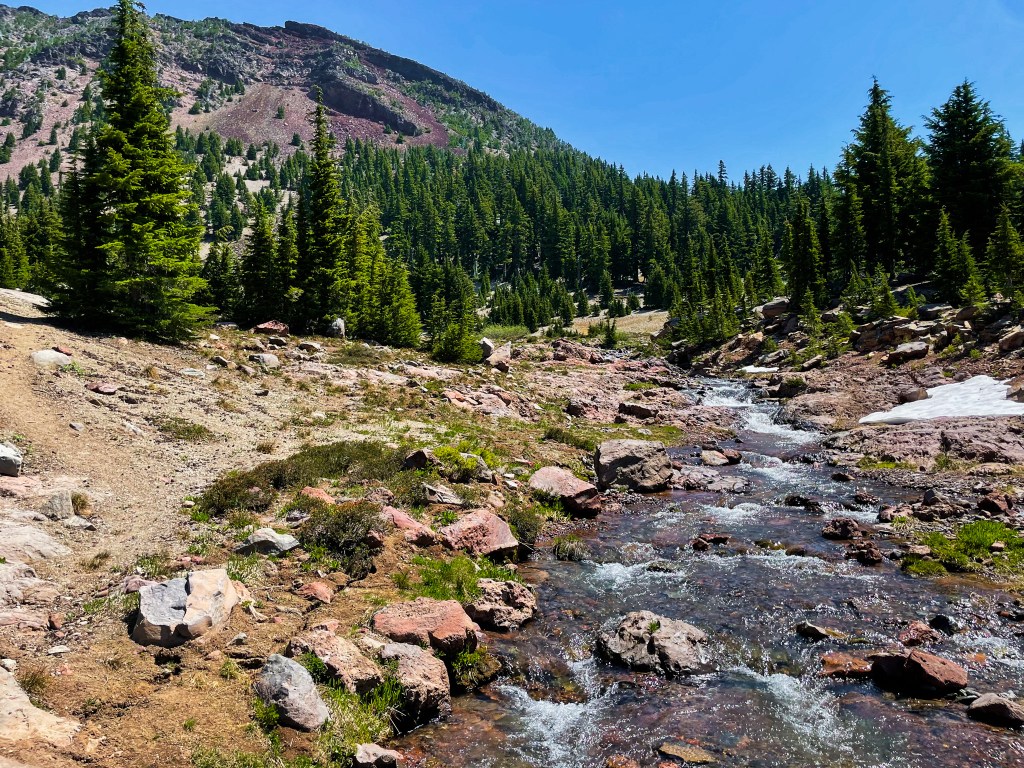
Snow-covered talus makes the going easy, and even provides natural air conditioning as the sun beats down on your back on the ascent. On the descent, the alpine environment is so open that Mount Bachelor is in view 100% of the time.
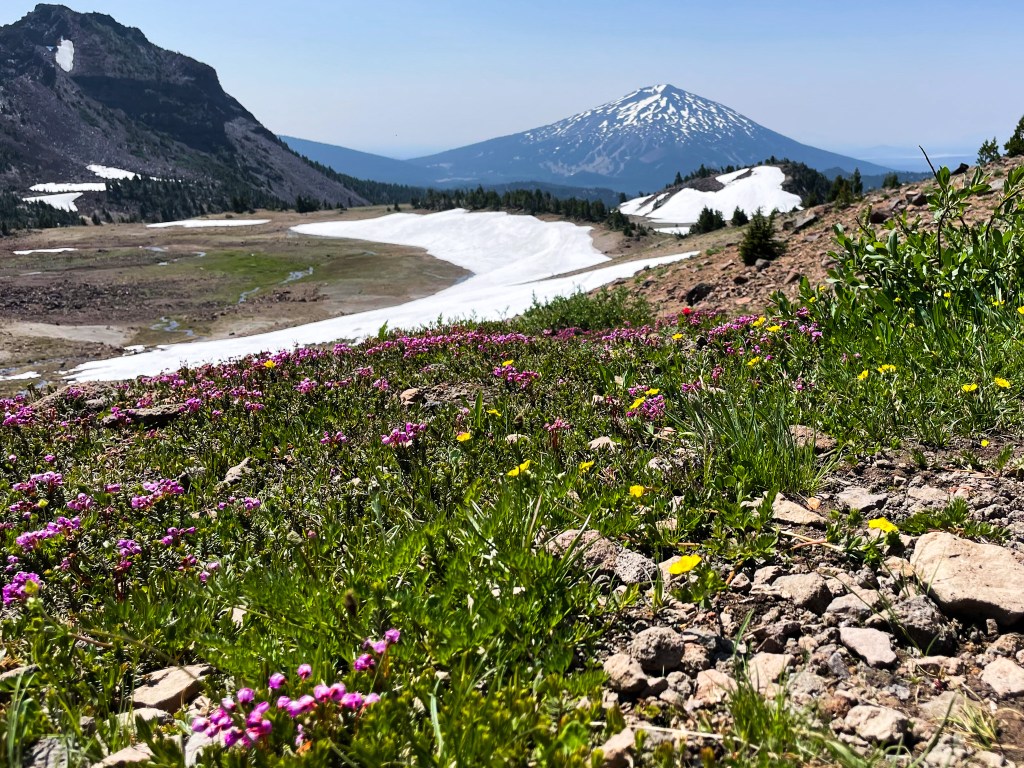
After 7,500 feet, I found myself firmly above the tree-line. The alpine gardens nestled amongst the red shale are an explosion of color. A particularly gorgeous creek-side wildflower garden houses a field of paintbrush, heather and more.

A battered wooden sign notifies hikers of a ban on camping near No Name Lake, an indication of its nearing proximity. The going gets particularly tough, as the trail all but disappears in a scree-field, but the way remains obvious. A cascading creek, the outlet of No Name Lake, tumbles down an austere creek-bed.
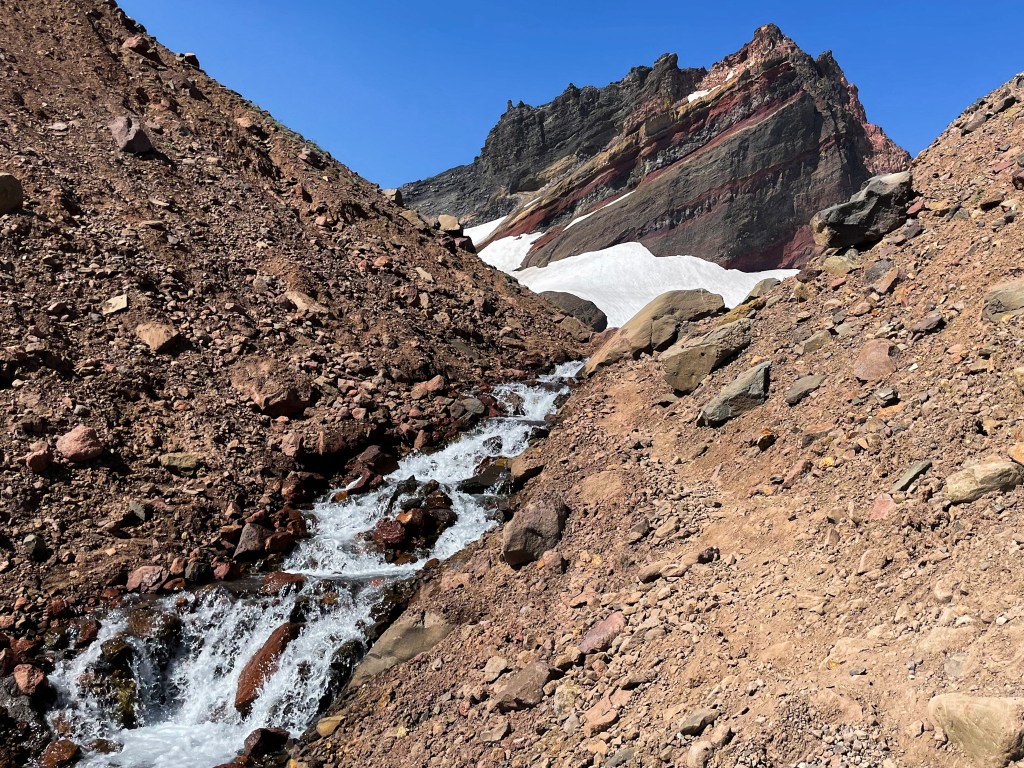
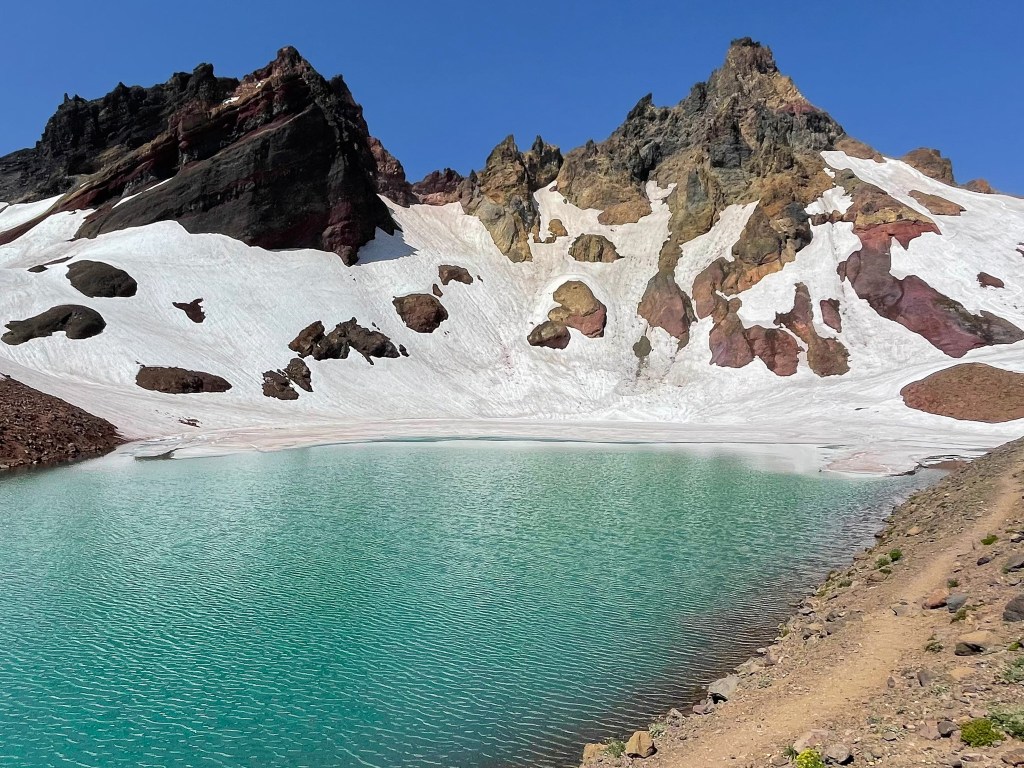
Just past the cascade is No Name Lake, a glacial tarn of extraordinary turquoise color. The color is bestowed upon it by the rapidly melting Bend Glacier, which cloaks the northeastern face of Broken Top. The tarn’s setting beneath Broken Top is half the beauty, with its maroon, rust and dark brown-striped strata streaking across its eastern face.
Believe it or not, there is more to see. After heading northwest from the lake, I climbed to the nearby ridge at 8200’. From this ridge, the views were beyond stunning. In the immediate foreground, a massive swath of glacial ice coats the northern side of Broken Top and culminates in a series of tarns. A mountain goat carefully scuttles his way down the icy slope to a rocky outcrop. It’s truly amazing they are ever eaten by mountain lions given the environments they are willing to traverse.
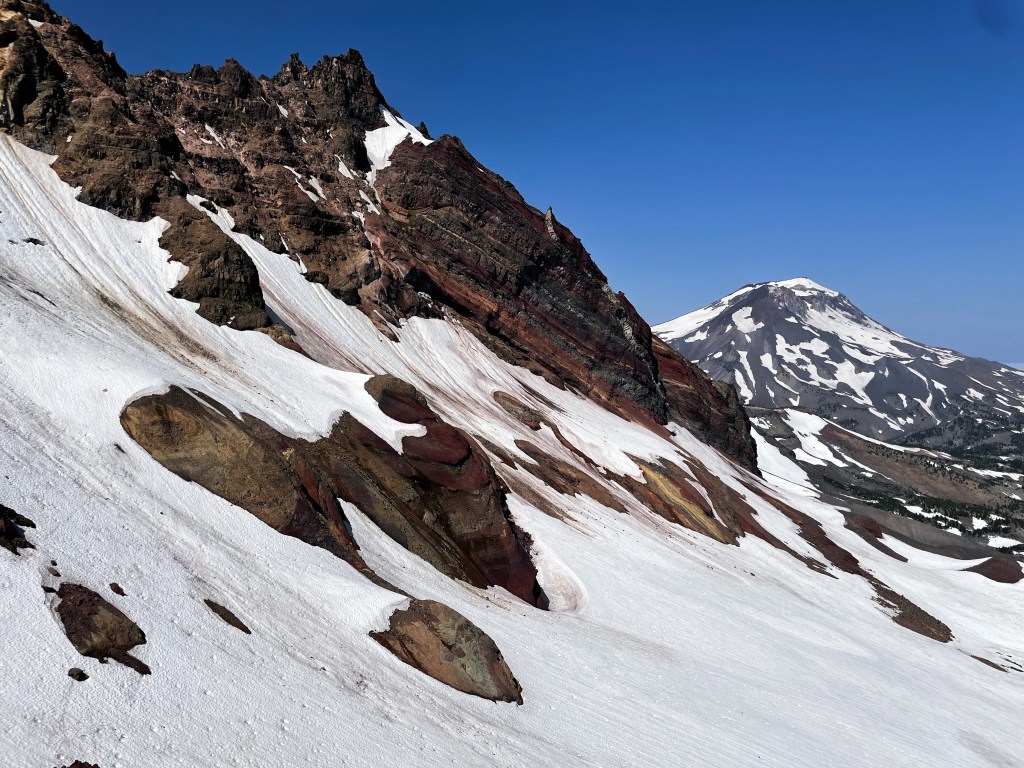
In the bigger picture, a kaleidoscope of color is represented. The warm colors of Broken Top continue to be represented, contrasting beautifully with the bluebird skies commonly found on a Central Oregon summer day. The purple-gray Three Sisters show their lovely faces for the first time this hike, protruding from a green forested expanse. It’s a scene that you could spend an hour taking in and still find more things to appreciate.

 Backcountry Bassett
Leave a comment